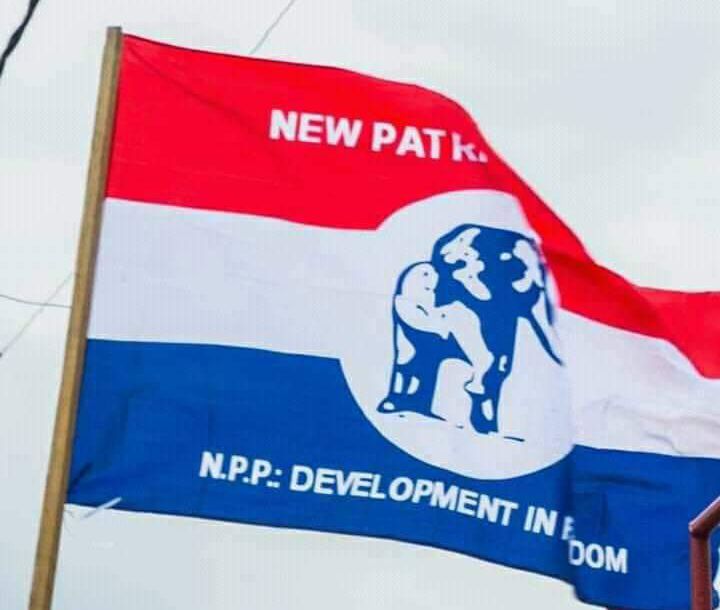

For decades, the Volta Region has been widely regarded as the political stronghold of the National Democratic Congress (NDC). The pattern has persisted through every democratic cycle since 1992, with the NDC consistently dominating parliamentary and presidential votes across the region. Many dismiss this as a matter of tribal or historical loyalty, but that explanation is far too simplistic.
The real issue lies in the New Patriotic Party’s (NPP) failure to build an effective communication strategy and emotional connection with the people of the Volta Region. In short, the NPP’s propaganda machinery in the region is weak, poorly coordinated, and often even counterproductive. If the party’s next flag bearer wants to challenge the NDC’s long standing dominance, fixing this should be a top strategic priority.
Politics, especially in Ghana, has never been about performance alone. It is about perception, the ability to communicate achievements and intentions in a way that resonates with people’s lived experiences. The NDC understands this well. In the Volta Region, the party has consistently positioned itself as the defender of the marginalized and the voice of inclusion.
The NPP, on the other hand, has largely relied on national level messaging from Accra, assuming that development projects will automatically translate into political goodwill. But roads, bridges, and schools mean little when people feel misunderstood or left out of the national conversation. As the saying goes, “If you don’t tell your story, someone else will and they’ll tell it their way.”
Until the NPP invests in consistent, localized propaganda that highlights its achievements and human connection, it will continue to lose the perception battle.
Perhaps the most damaging issue undermining the NPP’s image in the Volta Region is the recurring narrative that Ewes are “foreigners” or “Togolese.” This narrative, unfortunately, has been fueled over the years by loose political commentary and government actions that appear to reinforce the perception of bias.
The prolonged closure of the Ghana Togo border, especially during the COVID-19 pandemic and around the 2020 election period, deepened that resentment. For many border communities particularly Aflao, Denu, and Agbozume cross-border trading is not just an economic activity; it is a way of life. The closure crippled livelihoods and businesses, leaving many to believe the policy had political undertones.
Whether or not that was the case, the perception of marginalization became a political reality. In politics, perception is everything. The NPP cannot hope to win over a population it continues to alienate, intentionally or not.
The NDC has spent years building a strong grassroots communication network in the Volta Region. Party communicators are ever-present on local radio stations such as Volta Star Radio, Dzigbordi FM, Holy FM, etc. They communicate in Ewe, attend local events, and respond quickly to community concerns.
By contrast, the NPP’s voice in the region often disappears between election cycles. Most of its propagandists operate from Accra and have little grasp of the cultural and emotional nuances of Volta politics. The result is a communication vacuum, one the NDC fills with ease.
If the NPP truly seeks to make inroads, it must build a permanent regional communication presence, train Ewe-speaking communicators, and establish local partnerships with community journalists and influencers. Propaganda is not just about defending a record, it is about staying visible, relatable, and consistent.
Another challenge is the outdated perception that the NPP is an “Akan party.” Despite appointing capable Ewes such as Richard Ahiagbah, John Peter Amewu, and others into significant roles, the party has failed to project such representation effectively. The absence of visible, proud Ewe voices within the party’s top hierarchy reinforces the stereotype of ethnic exclusivity. The NPP must actively celebrate and amplify its Ewe members and supporters, not only during elections but as part of a long-term effort to rebuild trust and inclusiveness.
Too often, the NPP’s rhetoric is dominated by economic jargon inflation rates, fiscal consolidation, GDP growth. While these are important, they do not connect emotionally with ordinary citizens. The NDC, by contrast, speaks the language of empathy focusing on livelihoods, fairness, and opportunity.
The NPP must shift from statistics to stories about traders in Aflao, fishermen in Keta, and farmers in Akatsi whose lives are directly affected by government policies.
For the NPP to break the NDC’s decades-long hold on the Volta Region and among the Ewe population, its next flag bearer must make strategic communication and perception management a central campaign pillar.